iPhone 18 Pro / Pro Max just landed. Limited stock. Order yours from £46/month >
iPhone 18 pre-order










Mobile business broadband connects your office or site through the 4G or 5G mobile network rather than a cable in the ground. A router, often called a hub or dongle, picks up the mobile signal and shares it over Wi-Fi to your devices, exactly like home broadband but without the physical line. Modern hubs are 5G, which is what closes most of the old speed gap with fibre.
Fixed-line broadband, by contrast, comes through a physical connection to your premises, these days usually full fibre (FTTP), and is what most people still picture as “proper” broadband.

There are a number of benefits to using mobile office broadband over fixed-line broadband for your business. Some of the biggest advantages include:

There is no engineer visit and no waiting weeks for a line. You plug in the hub, insert the SIM, and you are online the same day. For a new office, a move, or a temporary site, that alone can be decisive.

This option is often faster than fixed-line connections, whether it’s for business or personal use. This is because mobile networks are constantly being upgraded to provide faster speeds, with 5G even reaching speeds of up to 750+ mbp/s!
The connection goes where you go, which suits home and hybrid workers, pop-up sites, events, and industries like construction where the office moves between sites through the year.

This is the big change; where 4G mobile broadband was a compromise, 5G regularly delivers download speeds from around 100 to 300 Mbps, and considerably more in strong-coverage areas, which matches or beats many fixed-line packages.

If a fixed line goes down, often through roadworks cutting a buried cable, a mobile connection keeps you online by switching to the next available mast. This makes 5G broadband an excellent backup connection, covered in its own section below.
Plans are easy to change, scale or add to as you grow, without the civil works a fixed-line upgrade can involve.
Need more data this quarter, another hub for a new site, or a temporary connection for a three-month project? That can usually be sorted in days rather than weeks, and scaled back down just as easily when demand drops.
For seasonal businesses, growing teams and anyone whose needs shift through the year, that ability to flex up and down without being locked into a fixed infrastructure decision is a genuine advantage.

With no line installation, the upfront cost is typically far lower than a new fixed-line connection, often little more than the router and the first month’s plan.
There are no engineer fees, no activation charges for physical work, and nothing to reinstate if you later move premises.
For a new business watching cash flow, or one opening several sites, keeping that initial outlay low across each location adds up quickly.
| Provider: | Category: | Set Up Cost: | Cost Includes: |
| BT | Fixed | £35 | Modem, Router, and Activation. |
| Virgin Media | Fixed | £49 | Modem, Router, and Activation. |
| EE | Mobile | £0 | Hardware |
However, there are also some drawbacks to using mobile office broadband, both for business and personal users.
The drawbacks of business mobile office broadband include:

Mobile broadband is only as good as the signal at your location. 5G coverage is now widespread in towns and cities but still patchy in some rural areas, so always check coverage for your specific postcode first.
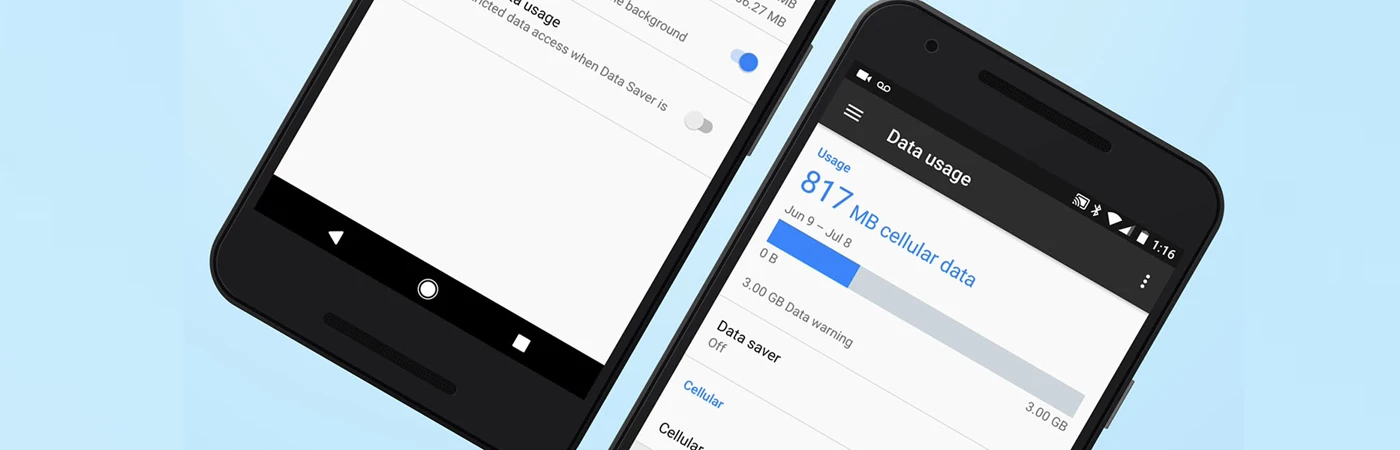
Mobile office broadband plans often have data caps, which means that you may have to pay extra if you go over your data limit. However, this is easily avoided with a 5G router and an unlimited data SIM plan.

Latency is the time it takes for data to travel from your device to the internet. Mobile office broadband can have higher latency than a fixed-line connection, which may affect the performance of some applications.
Mobile connections generally have slightly higher latency than fibre. For everyday work, calls and cloud apps this is rarely noticeable, but it can matter for latency-sensitive applications.
Speeds can vary with network demand, distance from the mast and local conditions, so a fixed line still offers more consistent performance.
This is the comparison that actually matters now. 4G versus fibre was no contest; 5G versus fibre is a real decision.
Fibre offers consistent, symmetrical-ish speeds and is the safer choice for very heavy, sustained data use. 5G can match or exceed mid-tier fibre on download, though upload and consistency usually favour fibre.
Fibre wins, with lower and more stable latency. For most business use the difference is immaterial; for real-time, latency-critical work, fibre has the edge.
No surprises here, fibre is more consistent day to day; 5G is more resilient to physical faults like cable damage, since there is no cable to damage. They fail in different ways, which is exactly why many businesses now run both.
5G wins clearly. Same-day setup, no engineer, fully portable, easy to scale.
5G business broadband is often cheaper to start and run, with no install cost, and unlimited 5G hub plans are widely available. Fibre can work out competitive on a long contract for a fixed location.
The honest summary: choose fibre when you are in one place, use a lot of data, and need rock-steady consistency. Choose 5G when you value speed of setup, portability, lower upfront cost, or you need a connection somewhere fibre is slow, delayed or unavailable. For many businesses the best answer is both, with 5G as backup.
| Factor | Mobile / 5G broadband | Fixed-line fibre |
|---|---|---|
| Setup time | Same day, plug and play | Days to weeks, engineer install |
| Installation cost | Low to none | Higher (line install) |
| Typical 5G speed | ~100 to 300+ Mbps | Varies by package, very consistent |
| Latency | Slightly higher | Lower, more stable |
| Portability | Fully portable | Fixed to the premises |
| Resilience to cable faults | High (no cable) | Lower (buried cable) |
| Best for | New, temporary, mobile or backup setups | Fixed sites with heavy, steady data use |
Please note: Performance will vary depending on your location and premises. Check the Ofcom coverage checker beforehand.
Prices and packages change often, so for current 5G hub deals see our business broadband range rather than a figure that will date.
Even businesses committed to fibre increasingly add a 5G hub as an automatic failover. If the fixed line drops, the 5G connection keeps payments, calls, cloud apps and essential systems running, often seamlessly. Because the two connections fail in completely different ways, running both gives you resilience neither can provide alone.
For any business where downtime has a real cost, this is the most compelling reason to have mobile broadband in the building, whatever your primary connection.
By location: One fixed site with good fibre and heavy usage leans fibre. Multiple, temporary, rural or frequently-moving locations lean 5G.
By size and usage: Smaller teams and lighter data needs are well served by 5G alone. Larger offices with sustained, heavy data may want fibre as primary, with 5G as backup.
By priority: If getting online today, portability or low upfront cost matters most, 5G. If absolute consistency and the lowest latency matter most, fibre.
For resilience: Whatever your primary connection, consider 5G as failover.

If you need a reliable, highly-portable, and fast internet connection to take with you wherever you go, then business mobile office broadband is the best option.
However, if you need a large data allowance and you don’t need to be able to take your internet connection with you, then fixed-line broadband proves a better option.
Elevate your broadband experience and save with one of our business laptop deals now. Already utilising an IoT device? See our guide on what an M2M SIM is and how to use it now!