iPhone 18 Pro / Pro Max just landed. Limited stock. Order yours from £46/month >
iPhone 18 pre-order










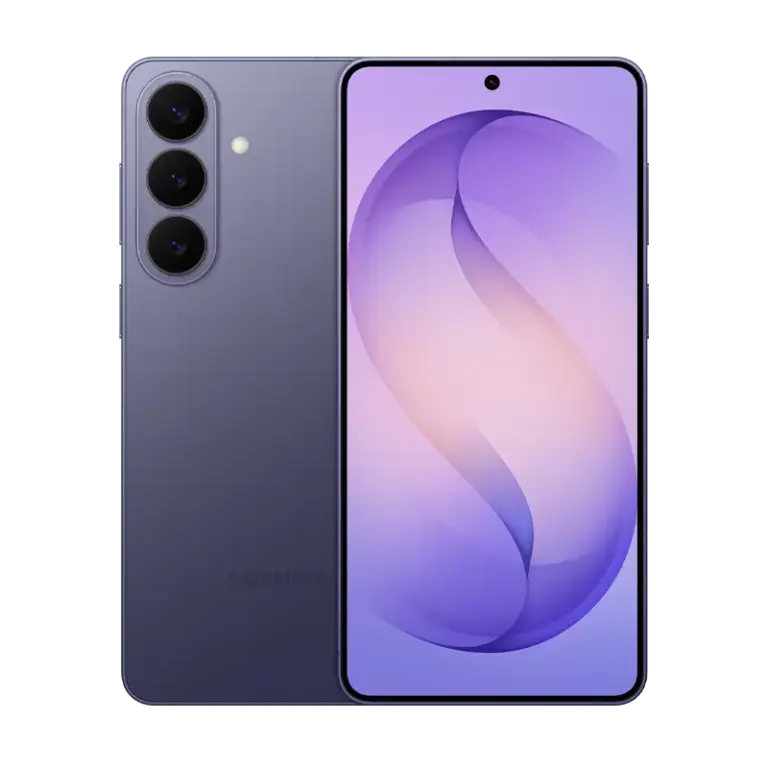
Samsung now sells three foldables in the 2026 line-up, and the naming makes the choice less obvious than it should be. The standard Galaxy Z Fold 8 is a new, wider “passport” shape. The Galaxy Z Fold 8 Ultra is the direct successor to last year’s Galaxy Z Fold 7 and carries the top camera and the biggest battery. The Galaxy Z Flip 8 is the pocketable clamshell. If you want a phone that opens into a small tablet for documents, email and side-by-side apps, you are choosing between the two Folds. If you want something that drops into a pocket and costs less, the Flip 8 is the one to look at.
This year Samsung split the Fold into two devices instead of one. The standard Z Fold 8 takes on a shorter, wider body, closer to a passport than the tall book shape of earlier Folds. The Z Fold 8 Ultra keeps the traditional book layout and inherits the Fold 7’s camera system. Both Fold models moved to bigger batteries and 45W wired charging, up from the 4,400mAh cell and 25W charging on the Fold 7. The Flip 8, by contrast, is a lighter revision of the Flip 7 rather than a redesign.
Both Folds share the same Snapdragon 8 Elite Gen 5 for Galaxy processor and the same software, so day-to-day speed is close. The real differences are camera, battery and shape.
The standard Z Fold 8 has the shorter, wider layout. Its rear cameras are a 50MP main and a 50MP ultra-wide, with no telephoto lens. The Z Fold 8 Ultra keeps the slightly taller book shape and carries a 200MP main, an upgraded 50MP ultra-wide and a 10MP telephoto with 3x optical zoom. On battery, the standard model uses a 4,800mAh cell against the Ultra’s 5,000mAh. Both charge at 45W wired and 20W wireless.
For business photography such as scanning a document or capturing a whiteboard, the Ultra’s telephoto and 200MP main give more room to crop. For everyday email and documents, the standard Fold 8’s wider screen is the more useful change.
These two devices use an entirely different folding design and different hardware.
| Feature | Galaxy Z Fold 8 | Galaxy Z Flip 8 |
| Form factor | Book-style horizontal fold (passport shape) | Clamshell vertical fold (pocketable) |
| Cover display | 5.5-inch wider display (10:16 aspect ratio) | 4.1-inch FlexWindow outer panel |
| Main display | 7.6-inch inner screen (roughly 4:3) | 6.9-inch tall internal screen |
| Processor | Snapdragon 8 Elite Gen 5 for Galaxy | Snapdragon 8 Elite Gen 5 (US) / Exynos 2600 (UK) |
| Rear cameras | 50MP main + 50MP ultra-wide | 50MP main + 12MP ultra-wide |
| Battery and charging | 4,800mAh, 45W wired | 4,300mAh, 25W wired |
| Connectivity | Wi-Fi 7, Bluetooth 6.0, UWB, 5G | Wi-Fi 7, Bluetooth 5.4, 5G, no UWB |
The choice here is genuinely about form. The Fold 8 gives you a near-tablet screen for multitasking, at the cost of size and price. The Flip 8 folds down to something that fits a jacket pocket and costs less, but it is a single-screen phone once it is open.
The Fold 7’s real successor is the Z Fold 8 Ultra, not the standard Fold 8. Compared with the Fold 7, the Ultra keeps the 200MP main and the 10MP 3x telephoto, upgrades the ultra-wide to 50MP, and moves from a 4,400mAh battery to 5,000mAh with faster 45W charging, up from 25W. Samsung’s Flex Titanium hinge also reduces the visible crease.
The standard Z Fold 8 is a different proposition. It is a new, wider body with a lighter two-camera setup and a 4,800mAh battery. It trades the Fold 7’s stronger camera for a wider screen and a more pocket-friendly footprint, so it is best read as a new option rather than a straight upgrade.
The Flip 8 is thinner and lighter, at 13.1mm folded and 180g, and moves to a new chip: the Snapdragon 8 Elite Gen 5 for Galaxy in the US, and the Exynos 2600 in the UK. Qualcomm quotes 35% better CPU efficiency for the Snapdragon version over the previous 8 Elite, and the UK’s Exynos 2600 is a step up from the Flip 7’s Exynos 2500. The cover screen, now called FlexWindow, adds a proper app tray, adaptive refresh and widget controls you can manage from the front.
What did not change is the part that matters most for battery life: the Flip 8 keeps the Flip 7’s 4,300mAh battery and its 25W wired charging. So the Flip 8 is a genuine improvement on performance and on the cover screen, but for a Flip 7 owner it is a modest step rather than a must-have.

For people who work off their phone and want to run two apps side by side or mark up a document on a larger screen, a Fold makes sense. Choose the Ultra if the camera and the longer battery matter, or the standard Fold 8 if you prefer a wider screen in a lighter body. The Flip 8 suits people who want a foldable mainly for its size and price and who spend more time in single apps than multitasking.
Two connectivity points are worth knowing. All three phones support Wi-Fi 7, 5G and eSIM, so they fit a modern business setup and a second line for travel. Only the Fold models include UWB, which helps with accessory tracking and some access systems. And in the UK the Flip 8 runs the Exynos 2600 rather than the Snapdragon version sold elsewhere, which is worth remembering if you compare benchmarks online.
Whichever way you lean, the contract matters as much as the handset. BusinessMobiles.com is an independent UK business mobile specialist, working across EE, O2, Vodafone and Three since 1999, so we can match any of these foldables to the network and tariff that fits how your team actually works, then handle upgrades and renewals afterwards. If you are weighing a foldable against your current setup, a quick review of your existing plan usually shows whether the upgrade pays for itself.
Overall, the bigger change this year is on the Fold side. Samsung added a new wider model, moved both Folds to larger batteries and switched from 25W to 45W charging. The Flip 8 is a lighter revision of the Flip 7: a faster chip and a more capable FlexWindow cover screen, on the same battery and charging. If you own a Fold 7, the Fold 8 Ultra is the natural upgrade. If you own a Flip 7, the Flip 8 is a smaller step.